Connect With Us

Followers

Thursday, February 22, 2018

Uncharted 4: A Thief's End Review

Uncharted 4
Back in 2009 I picked up a PlayStation 3 for the sole purpose of being able to play the stellar exclusives Sony had been releasing on the console. I specifically had my eyes on the two Uncharted games that had been released already. I was so amazed at how these games presented themselves and they easily became two of my favorite games ever after I beat them a couple weeks later. Naughty Dog then released the equalling impressive Uncharted 3 in 2011, then followed by the spectacular The Last of Us two years later. It's safe to say I am a huge fan of the games Naughty Dog makes. They know how to create a satisfying story that rivals film and blend them with entertaining gameplay mechanics and unrivaled presentation. Nearly three years after being revealed, Uncharted 4 has finally arrived on the PlayStation 4 and boy was it worth the wait.

Uncharted 4: A Thief's End is a fantastic conclusion to the series and a must play game for anyone with the PlayStation 4. Whether you're a fan of the previous games or new to the franchise, there is enough here for everyone to enjoy. Naughty Dog somehow creates a story that will please diehard fans that wraps up the series, while also making a game that stands on its own. It's an impressive feat that only Naughty Dog has seemed to be able to do over the past decade.

In his final adventure, Nathan Drake's brother returns after being thought dead to pull him into one last adventure filled with draw dropping sequences, exciting firefights, and emotional moments that are the best the gaming industry has ever seen. It's very impressive that Naughty Dog was able to introduce the character Sam (Nathan's Brother) and make us care for someone we just met. I was particularly nervous that they were going to try and shoehorn him into the story and that it would take away from the characters we have been with for three games prior. Luckily his character is a bright spot of the game and is the catalyst of this game.

Nathan, Elena, and Sully are the only characters from previous entries to have huge roles in the game and each get their time to shine. Sully is only character I think get's a disservice, not because his arc isn't good, but because he isn't in the game a whole lot. When I think of Uncharted I think of Nathan and Sully. It's not a huge gripe but he of course gets his crowd pleasing moments and lines that make up for the lack of screen time.

The two antagonist are probably the best of the franchise. Their motives are the least black and white of the games, in terms of villains. They each have their own agenda and seem less like villains and more like actual people. I would go into more specifics on their characters but I don't want to ruin any surprises.

The story as a whole revolves around Nathan and Sam. Their past is explored thoroughly throughout the game, which not only grounds their relationship, but also gives reasoning behind the events in the game. It's a wonderful story that has a bit of everything, delivering the most evenly paced game out of the series.

Gunplay and traversal is of course the bulk of the game. Shooting has never felt better here, though mostly unchanged from Uncharted 3. Hand to hand combat is the most impressive newly refined feature, it's very seamless and there's a flow to it. Climbing and exploring is very fun this time around. It feels very natural paired with the newly more open areas and beautifully created world. There is now a grappling hook that adds excitement to both movement and combat that should have been in the very first game.

Uncharted has always had jaw dropping graphics and this entry is no different. It is able to balance amazing detail close up and far away with silky smooth frame rates. Uncharted 4 also has amazing motion capture work and animation throughout. There was a moment fairly early in the game in Scotland where a light snow is falling and while walking around I noticed the snow lakes were landing on Nathan's jacket and melting into it. It was an extremely detailed aspect that you would have to really be looking for to even notice. Its these details in Uncharted 4 that blow my mind and makes the world feel real.

I could literally go on forever about Uncharted 4 and everything it does right, I just don't see anything particularly wrong with the game. It might not be everybody's cup of tea, but the game is technically flawless and features a compelling story that is even more importantly an entertaining one. Naughty Dog has created the best game of this generation and the best game of the franchise. Uncharted 4 is the kind of game you go out and buy a PlayStation for and deserves a five out five.


Article Source: http://EzineArticles.com/expert/Charles_J_Hines/1376554


Dancing Star Night and Dancing Moon Night will support playstation VR (Persona 3 and Persona 5)


Persona 3 Dancing Moon Night and Persona 5 Dancing Star Night is launching later this year, and we’re learning some of the new features coming to the game. Just recently, a PlayStation Blog Japan post has revealed that both games will support PlayStation VR.
The description explains that each title will allow fans to customize their dancers with different costumes and items. Similarly, there will be new conversation events called “Commu” with characters, and the PlayStation 4 versions of each game will be supporting PlayStation VR. That said, the blog didn’t go into detail about what features will be included with VR, so fans will just have to wait for further news.

Persona 3 Dancing Moon Night and Persona 5 Dancing Star Night are two dancing spinoff games featuring plenty of remixed songs from the original titles. Fans can play as their favorite characters and groove to tracks such as “Life Will Change,” “Last Surprise,” “Wiping All Out,” and “Way of Life.”
They recently revealed two new characters trailers for Junpei Iori and Ann Takamaki, showcasing some of the new costumes and partner dances. The limited edition versions will also come with a pretty sweet costume coming from another Atlus game. Persona 3 Dancing Moon Night and Persona 5 Dancing Star Night is slated to launch this May 24 in Japan. The developers have yet to announce a Western release date for both spinoffs.

Half-Life's Gordon Freeman Comes To Final Fantasy XV on PC


The much-anticipated Windows version of Final Fantasy XV is launching on March 3rd, and when the game does finally hit the platform, it will include a Gordon Freeman-shaped bonus. Today, Square Enix revealed that anyone who purchases the game on Steam, from now until May 1st, will get an in-game costume so that you can dress up lead character Noctis as the bespectacled star of the Half-Life series. The getup includes Freeman’s iconic orange HEV suit and glasses, and, naturally, a crowbar as a weapon. The outfit will also be available in FFXV’s “Comrades” multiplayer expansion.


Half-Life's Gordon Freeman Comes To Final Fantasy


Seeing Noctis in Gordon Freeman cosplay is jarring, but it’s also one of an ever-growing list of FFXV crossovers. You can already drive the game’s iconic luxury car, the Regalia, inForza Horizon 3, and there was a limited time in-game event where Noctis was an assassin from Assassin’s Creed. Despite launching back in 2016, the game has steadily grown with expansions, updates, and spinoffs. Most recently, Square Enix released a slimmed-down mobile version of FFXV for those who are new to the series. As for the Windows edition, it will include some nice features when it launches next month, including support for native 4K and 8K resolutions, a first-person mode, and an expanded map, complete with a boat to drive around.

Final Fantasy XIV Housing Is Now Open To Players "And Plenty Of Good Plots Remain"

Final Fantasy XIV Housing


Last summer, two players on Final Fantasy XIV ’s Mateus server made headlines for the ownership of nearly all available land and housing on an entire ward. In a long letter, one of the two players defended themselves by explaining the hard work they’d put in to purchase all the houses across their alt characters and shell free companies in a low-population, low-demand server. Their actions spurred heated debate in the Final Fantasy XIV community.

Square Enix responded to the dearth of desirable player housing, not only on Mateus but on other servers as well, by implementing extensive adjustments to population as well as housing. These adjustments included marking certain servers as “Preferred” with a “Road to 60” EXP buff for newly-created characters, the addition of new wards and temporary restriction of plot purchases.

“With the release of FFXIV: Stormblood , we took measures intended to address the population disparity across Worlds. With Patch 4.2, we then placed a temporary moratorium on all plot sales to individuals,” explained game producer and director Naoki Yoshida in a recent news post . “The moratorium placed on private plot sales in conjunction with the addition of new plots has, as we anticipated, allowed a great many free companies to purchase plots and reduce the overall disparity between them.”

In patch 4.2, only free companies rank 6 or higher with at least four members could purchase housing. Auto-demolition of housing, which Square Enix had paused in the wake of natural disasters in the U.S. and the Caribbean, resumed as well. The team added wards 13 to 18, subdivisions included, across all four housing areas for a grand total of tons of new plots (I can’t do math).


Now that free companies have had weeks to gain access to housing, housing is open to private players once more, but with a critical caveat: “Each service account may only possess one free company estate hall and one private estate per World. Once this limit has been reached, it is not possible to purchase further plots of land in the same World on that service account, including separate characters on the same World.”

Players such as the two from Mateus who caused such a ruckus are grandfathered in. “Players possessing housing above this limit prior to patch 4.2 will not be affected by this change,” states the official housing guide. You can check out the full and complete guide to housing here with all caveats and niche cases explained.

Plenty of excellent plots are still available, as posts on the Final Fantasy XIV subreddit make clear. (My own server boasts a similarly empty ward of The Goblet, and despite being a relatively new player, I was able to pick up a well-situated cottage in the Lavender Beds subdivision.)

What do you think of the current housing situation in Final Fantasy XIV? Were you able to purchase a house? Do you think a good plot will still be available once you’ve saved up the gil, or will you have to wait until more wards are added on your server? Feel free to let us know in the comments section below.

Interview: Metroid Co-Creator Details Fusion Remake Pitch, Skipping Switch and Series’ Future

metroid
Metroid Samus Returns


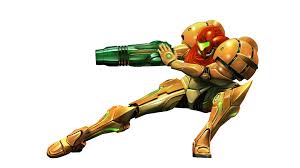
Much to the delight of those that follow the beloved Nintendo science-fiction property, Metroid: Samus Returns is being praised as a wonderful return to form for the franchise. Our review of Samus Returns pointed to the newest entry’s laser focus on enhancing longstanding qualities of the exploration-heavy platforming series, and the man playing a large role in the quality of the final product was none other than franchise co-creator Yoshio Sakamoto.
I was recently given the opportunity to interview the aforementioned Metroid co-creator/Samus Returns producer, learning more about his latest title and the future of the series in the process. Those eager to see the interview can check it out below:


GR: Were there other studios considered to develop Metroid: Samus Returns before deciding on MercurySteam? Were there other studios considered to develop Metroid: Samus Returns before deciding on MercurySteam?

“When I was first thinking about creating a remake of Metroid II for the 3DS, I heard there was a Spanish developer called MercurySteam that wanted to try remaking [the Gameboy Advance title] Metroid Fusion. Hearing their name reminded me they were the ones who had recently made a Castlevania game, and that sparked my interest. When I sat down and played their 3DS title Castlevania: Lords of Shadow – Mirror of Fate, I could tell they were a developer with real skills and a good design sensibility, and decided to go to Spain to talk things over with them. During that visit to MercurySteam, I saw firsthand the sincerity they bring to the task of game development. Their respect for and understanding of Metroid was also clear, and so we decided to start creating a prototype. I suppose that’s part of the reason we never really considered working with another developer.”


GR: Why did you decide to keep Metroid: Samus Returns as a side-scrolling game rather than reboot it as a first-person shooter?

“
I’ve never been a producer for the Metroid Prime games, and by this point it’s sort of understood that I’ll leave the first-person shooter entries in the series to other producers. But even aside from that, I’d always thought a remake of Metroid II like Samus Returns would best be done as a 2D side-scroller, and I’ve never really doubted that.”


GR: Are there any plans to continue making side-scrolling Metroid games in the future or is this just a one-off deal?

“Personally, I’m constantly exploring the possibilities and the future of the Metroid series, and part of that means not imposing any limits on ourselves when it comes to game design or hardware platforms.”


GR: Why did the team opt to bring the game to 3DS rather than the Nintendo Switch?


“
One of the themes we chose to stick with this time was utilizing both 3D visuals and a dual screen setup. In fact, I’d been interested in creating a Metroid title that allowed you display the map constantly on a second screen and interact with the elements of the UI by touching them since the time of the original DS. The 3DS made the 3D visuals possible of course, and the more powerful hardware allows for a higher fidelity experience—both are reasons we felt this was the right choice.”


GR: Why did you decide to revisit Metroid II and not the original Metroid that debuted on NES or even Super Metroid on SNES? Is it because the story of Metroid II holds more relevance to future installments like Metroid Prime 4?

“
Metroid II was released more than 20 years ago, and it chronicles the first meeting between Samus and the Baby Metroid. That event is crucial to the story of the series, and I’ve thought for some time that the best way to retell that tale for a new audience of gamers would be via a remake.”


 GR: Would you personally like to remaster/re-imagine other Metroid titles in a similar way?

“It really depends on the reasons you have for undertaking such a challenge, whether there’s a need for it, and your own motivation, but at the moment I have no plans for another remake. I think we need to spend time considering whether fans are only wanting remakes going forward, and what that might mean.”

metroid
Metroid Prime


GR: The producer behind the animated Castlevania series, Adi Shankar, stated that he’d love to take on a mature Metroid animated series next. Would you have any interest in seeing this happen with Metroid or is a mature take a little too violent for the property?

“
It’s an honor to hear of that sort of interest, but when it comes to expanding the Metroid franchise beyond the medium of games, I feel the position I’m in now doesn’t make me the best person to tell that tale.”


GR: A lot of fans would love to see a live-action Metroid movie. Do you think this is a possibility and if so then who would you like to see direct it?

“As I mentioned above, I don’t feel I’m in the best position to tell the tale of Metroid when it comes to expanding the franchise beyond the province of games.”

Metroid: Samus Returns is available now, exclusively on Nintendo 2DS and Nintendo 3DS handhelds.

Source: https://gamerant.com/metroid-samus-returns-producer-yoshi-sakamoto-interview/


Wednesday, February 21, 2018

Monster Hunter World review

monster hunter world
Monster Hunter World Review

There are plenty of mightier, meatier monsters to be found out there in the wilds of Monster Hunter World's Astera. Like Tobi-Kadachi, the mutant squirrel bastard who'll stun you with the spark in his tail as he leaps from one tree to another, or the fire-breathing Anjanath who'll happily one-shot fledgling hunters. Later, there are the grand towering Elder Dragons that'll knock you this way and that as you whittle away at their generous pools of health on hunts that sap up the best part of an hour, all before you pick yourself up from the forest floor, dust yourself off and, like a kid stepping off a rollercoaster, say to yourself let's do that again.

Monster Hunter World
Publisher/developer: Capcom
Platform: Reviewed on PS4
Availability: Out January 26th on PS4 and Xbox One, PC version coming later this year

But still, it's the humble Paolumu I've ended up loving the most. A mid-tier monster who prowls the Coral Highlands - a stunning otherworldly tangle of clashing pinks and purples that looks like it's been culled straight from some 60s sci-fi gem - Paolumu is a masterpiece of offbeat imagination told through exquisite design and animation. A cutesy flying wyvern with a neck that can puff up until it looks like a child's swim ring, the Paolumu is a bat/hamster hybrid who's a joy to fight. I spent half a day happily dancing alongside them and repeatedly slaying them, just so I could plunder their remains for a full kit of gear; a fluffy number that serves some campy Barbarella fierceness. There are sturdier, more useful armour sets out there, but that's not really the point of Monster Hunter. It's all about doing things with a little bit of class.


monster hunter world
Monster Hunter World Armor


And Paolumu gets to the very heart of why I love Monster Hunter; it's silliness delivered with an awful lot of style, and all built around one of the most compelling loops you'll come across in gaming. Hunt monsters and strike them down, so that you might craft trousers from their carcass that'll help you best other, greater beasts whose corpses can then be used to craft more powerful trousers still. Rinse and repeat, until you realise you've clocked up a good 100 hours and found yourself looking at the family cat, wondering what kind of perks you might earn if you skinned them and turned them into a hat.

Monster Hunter World, which serves as the foundation for the fifth generation of Capcom's series, doesn't change any of that. At its very core this is the very same Monster Hunter, and in many ways it's a more streamlined affair than we've become used to in recent years. After the dizzyingly broad variety box that was Monster Hunter Generations - itself a compilation of sorts that brought the fourth generation of Monster Hunter to an end - it's even a relatively slight offering. Gone are the Hunter Arts, and there are no new weapons added to the 14-strong roster. In Monster Hunter World, the very kernel of the series goes largely untouched.

Which is well enough, really, given how wonderful that kernel is, and Monster Hunter World at least makes an effort to open it up to all. To say it's accessible might be a slight overstatement - it's quicker to get new players into the thick of the action, though it's still just as quick to knock them back on their arses a few hours later and several key systems remain unexplained throughout - so perhaps it's best to say it's undergone a fair amount of modernisation, and now lags only slightly behind its contemporaries.


There's an all-new training area where you can learn the intricacies of the hunting horn, or how to become more effective when wielding the hammer. Out on the field, scoutflies will now guide you to your prey once you pick up their trail, doing away with the headless dance that preceded the majority of hunts in older versions of the game. Progress is now more parsable, with single player and multiplayer combined and a clearer through line piecing together the campaign. The difference between Monster Hunter World and its predecessors can feel profound, though it says a lot about how impenetrable these games once were when the fact you no longer have to look up online what key quests you need to complete to move things forward is something worthy of praise.

To say that this is all simply Capcom opening up Monster Hunter to a broader audience is doing it a grand disservice, though. Elsewhere, there's a reinvention of a long-standing series that's just as radical in its own way as Nintendo's Breath of the Wild, and just as effective too. At the centre there's that same taut combat - communicated with such fidelity it feels perfectly at home on the big screen - though Monster Hunter World's real trick is building outwards. The clue is in the title, really, and Monster Hunter goes to great pains to draw you into its environments.

G lock
Monster Hunter World, in a first for the series, is releasing around the world on the same day. There are clear perks to that - and in a neat touch, servers are now global too, meaning we can fight alongside our fellow Japanese hunters - but also pitfalls too. Prior western releases have typically been the 'Ultimate' versions of the game that come a year or so after the original release, complete with 'G-Rank' - Monster Hunter's endgame in which the biggest challenges, and the biggest rewards, are to be found. There's no G-Rank in Monster Hunter World, though that's not to say it's short on challenge or things to do - you're looking at around 50 hours to see through the main campaign, and there are also tougher variants of existing monsters available should you be up for the fight as well as an arena. Capcom's going to continue supporting Monster Hunter World with updates for the foreseeable future, and it seems likely that G-Rank will come as part of some future paid expansion, perhaps to coincide with the PC release later on this year.


They might not be as plentiful as before, but they're certainly more detailed. Areas such as Wildspire Wastes and Ancient Forest are impossibly dense arenas, offering up seemingly endless warrens it's easy to get lost in. Each map is now one seamless whole, with the loading screens that used to divide individual areas now excised completely. Each area is now thick with secrets, and with little tricks that can be used to help turn the tide in your favour during any particular hunt. There are traps to be sprung, beasts higher up the food chain to be summoned to help your cause and all manner of tools constantly at your disposal. Monster Hunter World is so crowded with ideas, and so liberal in their disposal, that it maintains the ability to surprise even after scores of hours worth of play.

In Monster Hunter World exploration is a reward in itself, in which you can partake in an expedition - the new open-ended adventures in which you're free to tick off whatever bounties you've picked up as you please, or merely tinker with the scenery - just as eagerly as you might take on a new hunt. It's not quite open world Monster Hunter, but it certainly benefits from a new sense of purpose in its environments. This series has never been short of fantastic beasts and wondrous toys with which to slay them; now it's got playpens that are just as impressive to boot.


Like Breath of the Wild, Monster Hunter World is a game that looks towards the west for inspiration, yet it's also one that western games could do well to learn from themselves. At a time when the likes of Bungie and EA are struggling to reward players for their investment in persistent online worlds, Capcom finds itself with something approaching the perfect formula. It's only getting on for over a decade old, but it's certainly never been any better than this.

That's not to say it's without its eccentricities, or its faults. There are omissions that will prove controversial with returning players. For fresher players there are frustrations, such as the seemingly binary multiplayer scaling that makes it harder for smaller groups to overcome certain monsters than the solo hunter. There's the clunky menus, and the many systems acquired over the years of Monster Hunter's long history that clatter around clumsily together; there are the appendages and offshoots and dead-ends that can still, despite the best efforts of Capcom in Monster Hunter World, make it all seem infuriatingly arcane.

Invest a little, though, and you'll get an awful lot back. The truth of Monster Hunter - and arguably its greatest strength - is that you're never truly its master, and that every player, be they novice or veteran, is always learning something new. Monster Hunter World sees 13 years of evolution come crashing together with some new influences to create a very exciting breed of beast. This has always been a superlative series; with the release of World, it's only become easier to see that's an undoubtable truth.


Kingdom Come: Deliverance review - history is a double-edged sword

kingdom come
Kingdom Come Deliverance

Kingdom Come: Deliverance and the history it explores are inseparable. There hasn't been a medieval world this real and substantial since The Witcher 3. The sense of time and place it conjures is astonishing. You feel your feet squelching in muddy, rutted paths, and smell the manure on the fields around you. But what you see isn't a fantasy world reinforced by a culture's past: it is a culture's past - its bones are made out of it. Kingdom Come is the most believable adventure into medieval history I've ever experienced.
That's the hook: realism. This is the dungeons-and-no-dragons role-playing game sprung from Kickstarter into a full-sized multiplatform release. The RPG offering a first-person medieval simulation like an Elder Scrolls game, with a world living around you, but without the fantasy, magic and monsters. Instead, it's developer Warhorse's own Czech history brought to life from the year of 1403, and the detail with which it has been recreated is staggering.

Kingdom Come hasn't tried to condense a whole world into a game, but instead focused in on a 16 square kilometre area of rural Bohemia, and the dozen or so small villages and towns found there at the time. Nothing feels made up. Everything is placed with the certainty of historical reality behind it; shops are where they are because it made sense at the time - bakers here, weaponsmiths and blacksmiths there. Inns emerge naturally as the town's beating heart - the first port of call for a traveller who can buy lodgings for a week at a time, as I suppose you once would. Everywhere there are windows like this into the past.

kingdom come deliverance
The game's rural beauty


Between the settlements is the tranquility of the countryside, birds trilling and flowers gently swaying. In the forests there's the hushed atmosphere a leafed roof brings, as deers scarper and hares and rabbits startle. And at night, wolves howl. This is a living world, made of rain and sunshine and even bone-shaking thunderstorms.
The meticulous eye for detail spreads into the game's systems, the standout being the most realistic recreation of sword fighting I've seen in a game. Swords and fighters are physical objects clad in all sorts of physical armour objects which react in unique ways. One cannot simply slice a plated opponent like a ham.
Combat revolves around attacking and defending areas governed by a kind of directional wheel. Stamina stops you going all out, and if you're hit while breathless you take lasting damage. You also see your viewpoint spin when someone lands a meaty blow, mimicking the disorientation you feel for real when someone smacks you.
When it works, it's a martial dance of careful timing and study as you watch an opponent to see where their guard leaves them vulnerable. You can feint, string together combos and respond with counters. There's genuine depth and skill to it. But when it doesn't work, it's infuriating. Trying to perform combos using a mouse, which slides too easily between attack areas, can feel like an impossibility (it does work better with a thumbstick), and trying to manage multiple opponents with a sluggish lock-on ends in death more often than not.

kingdom come deliverance
Sword Fight Scene

Underneath Kingdom Come's many systems are skill lines - you improve your skills by using them, as in an Elder Scrolls game - and there are perks to unlock in most of them. There are the obvious combat skill lines with their combos and damage boosts and defense bonuses, and stealth lines with backstabs and lockpicking. And there are more quirky skills like drinking and reading too. There are skills galore. And everything is collated in a wonderful set of ornate menus. The maps! Oh, you should see the maps.

kingdom come deliverance
How Big Is Kingdom Come: Deliverance's Map?


There's a clothing and armour system with more layers than an onion. My hero has a plate chest piece over a chainmail shirt over a linen shirt, a scaled cap over a mail hat over a padded hat, banded trousers over mail trousers, then boots, gloves and arm vambraces. Each piece complements another by, say, padding blows from blunt weapons. It's depth under depth and historical explanations everywhere you look. It's armour based on an understanding of combat rather than an appreciation of aesthetics.
Kingdom Come is shaped and spurred to life by a surprisingly entertaining story about a boy called Henry, who finds himself unexpectedly thrust into a lord's service and into climbing the ranks of feudal society. There's a sense of B-movie-ism compared with a blockbuster like The Witcher 3. The quality across the board isn't as uniformly high: the characters don't look great, the animations aren't that smooth, and the voice acting varies wildly. But Kingdom Come isn't bad. The directed cinematics can often deliver surprising naturalism, and I really warmed to actor Tom McKay's affable portrayal of Henry after a while. There are some memorable moments - some touching, others very funny. There's a playfulness and irreverence underneath all the history.
The story also helps drag Kingdom Come out of the mud it can sometimes get bogged down in. I appreciate Warhorse's efforts to make quests a bit trickier than going from A to B, but satisfying C, D and E every time can get tiring. On top of this is a constant need to manage your inventory after every fight, to shift the heavy gear to your horse before shifting it back again before you sell. It sounds like a little detail, but in the flow of the game it's a niggling constant and adds up. That's on top of repairs to carry out, food to find and beds to sleep in, both to keep energy up and to save your game - the only way to save on the fly is via a Saviour potion.

kingdom come deliverance
Kingdom Come: Deliverance skill trees

In other words, you don't get anywhere quickly in Kingdom Come, which is fine when everything is going well but not when you're snagged on another of the game's jagged edges. I managed to freeze a village in an un-progressable state by going somewhere before I ought to, for instance, and it took me a couple of hours to notice and reset. I managed to kill a bastard of a knight before I ought to and stuck the game in a similar state, and again it took me hours to rectify. I've been flagged as a criminal for no apparent reason and slung in jail for days. I've spent hours lost in the woods only to stumble on the area I needed to stand in to trigger a 'quest complete' message. They are kinks which contribute to a general feeling of jankiness across the whole game.
When Kingdom Come does succeed, it's peerless. The Elder Scrolls and The Witcher can feel flimsy next to the sophisticated systems and heft of history on show here.
But there's also a big problem. There are no people of colour in the game beyond people from the Cuman tribe, a Turkic people from the Eurasian Steppe. The question is, should there be? The game's makers say they've done years of research and found no conclusive proof there should be, but a historian I spoke to, who specialises in the area, disagrees.
"We know of African kings in Constantinople on pilgrimage to Spain; we know of black Moors in Spain; we know of extensive travel of Jews from the courts of Cordoba and Damascus; we also know of black people in large cities in Germany," the historian, Sean Miller, tells me. Czech cities Olomouc and Prague were on the famous Silk Road which facilitated the trade of goods all over the world. If you plot a line between them, it runs directly through the area recreated in Kingdom Come. "You just can't know nobody got sick and stayed a longer time," he says. "What if a group of black Africans came through and stayed at an inn and someone got pregnant? Even one night is enough for a pregnancy."

Kingdom Come Deliverance PS4 Trophy Rewards You For Being A Virgin

It's not conclusive proof but it's readily available doubt to undermine Warhorse's interpretation. What muddies the water further is whose interpretation it overridingly is: creative director, writer and Warhorse co-founder Daniel Vavra's. He has been a vocal supporter of GamerGate and involved in antagonistic exchanges on Twitter (collected in a ResetEra thread). More recently, he wore the same T-shirt depicting an album cover by the band Burzum every day at Gamescom 2017 - a very visible time for him and his game. Burzum is the work of one man: Varg Vikernes, a convicted murderer and outspoken voice on racial purity and supremacy. He even identified as a Nazi for a while.
This isn't to say Kingdom Come: Deliverance is a hotbed of racism, because it isn't. The Turkic Cumans speak a different language and are a hostile enemy, which seems like a limited portrayal but no less so than any other war game I can think of. Then again, I'm white, so maybe I've missed things. And racism can take many forms, one of them being exclusion.
More apparent to me was the back-slapping laddishness revolving around bedding women. I'm pursuing a love story over here, while over there bedding a noble and having one-night stands. That's in addition to my Troubadour perk which makes me even more irresistible to women and lets me use the "bathwenches" for free, which ties into a key mechanic of keeping yourself clean and patched up. It also means I get the Alpha Male buff (+2 to Charisma) because I've been satisfied and apparently it shows. It literally says that. The game's Codex even feels the need to describe the ideal woman of the time: "a thin, pale woman with long blonde hair, small rounded breasts, relatively narrow hips and a narrow waist".
All of which means that a shadow lingers over Kingdom Come: Deliverance. Instead of challenging the Dark Age it reinterprets 615 years later, the game seems to delight in it. Instead of seeing notes in the margin of a history book, we get what feels like a glossy pamphlet advertising an escape into an oddly romanticised past. And it's that, ultimately, which makes me too uneasy about Warhorse's work to be able to recommend it.

Unleashing the Future with RTX 4090

The Future of Gaming with RTX 4090 The gaming world is in constant evolution, and with the release of NVIDIA's RTX 4090, the future of g...